

If You’re Always Stressed And Tired, Start Here
Why meditation might be the missing piece to your health as a busy nurse mom
This post is part of a series:
The Real-Life Nervous System Reset: From Irritable and Exhausted, To Feeling Better
If you’re constantly feeling overwhelmed, irritable and exhausted, read on. This series walks through the exact first steps I used to help me feel better, even in the middle of being a busy nurse and mom. The same can work for you, too.
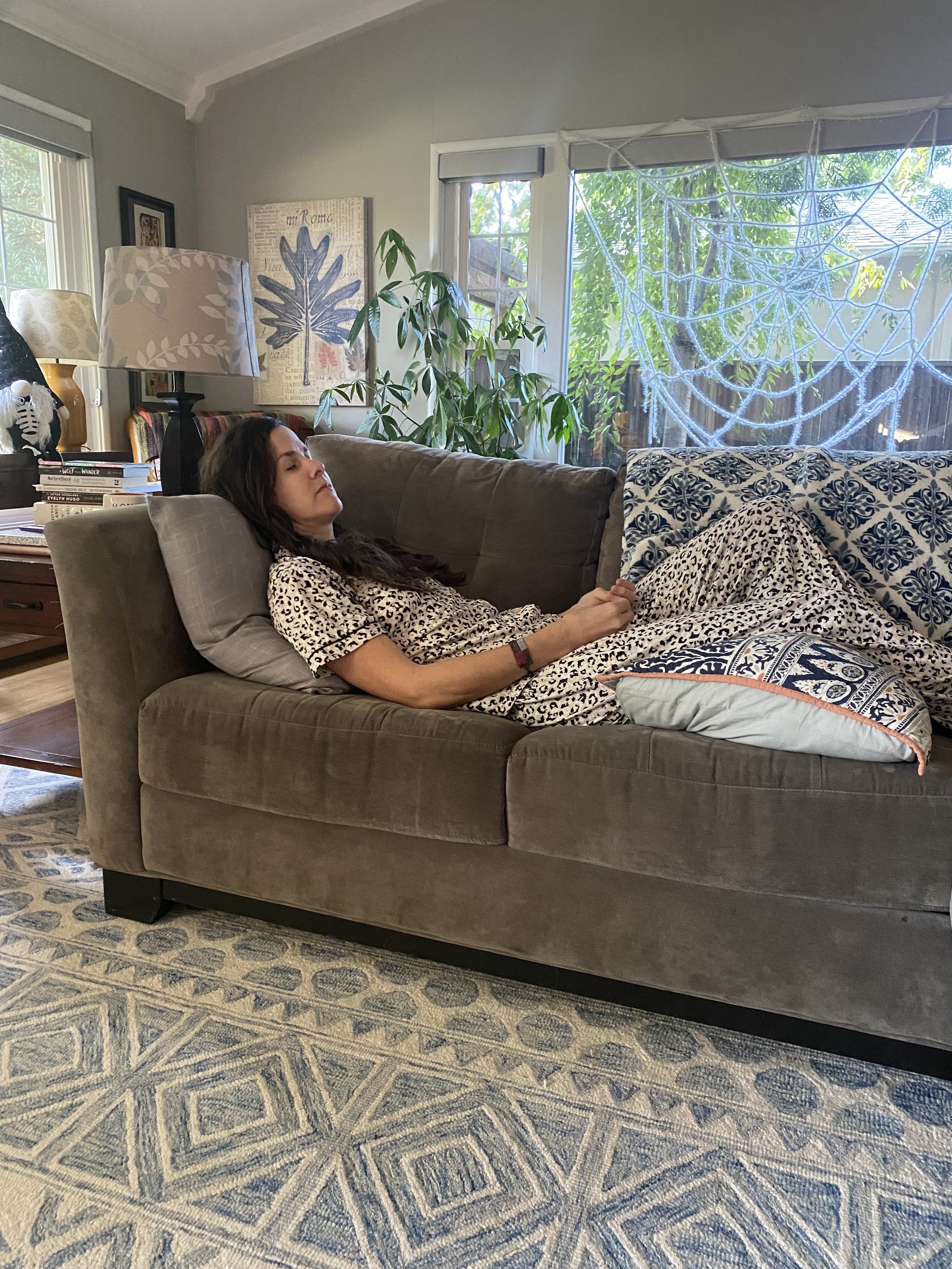
My kids say I look like I’m asleep when I meditate. Don’t be fooled! That’s some deep rest happening here. I usually sit to meditate, but sometimes a nice long session laying down can be very healing.
I’m just going to come out and say it, meditation is amazing. I know, I know, you’re thinking, “ugh Sarah, give me something new! Something that I can actually do to feel better. I’m not a person who can meditate, and does it even really help that much anyway?”
The simple answer is yes, meditation does help that much. And yes, even you can do it, the person who can’t stop the thoughts from running through their mind when trying to sit still.
Stopping your thoughts or "quieting your mind” is not necessary to do meditation “the right way” and is missing the point. I don’t know who is running around saying you have to quiet your mind, but they need to stop. This message is deterring people from giving meditation a solid try.
Meditation is an awareness practice, and the point is to begin noticing your thoughts, becoming the watcher of your thoughts. So it’s ok if you have 10,000 thoughts that come through when you sit down for 10 minutes. You don’t actually have to “quiet” them!
Meditation teaches you how to notice your thoughts but not identify with them. You learn not to label the thoughts as good or bad, but rather that thoughts are like clouds just coming in and out across the sky-space of your mind. You learn to unhook and let thoughts go… that was huge for me.
I first learned that meditation doesn’t mean quieting your mind from Ziva Meditation teacher Emily Fletcher in an interview with Dr Mark Hyman on his podcast, the Doctor’s Farmacy. You can check out their interview here
Something about the way Emily described meditation sounded approachable and doable. My ears perked up when she said meditation can provide deeper rest than sleep…and I was just so tired that I would try anything.
There was a link to her newsletter in the podcast show notes so I signed up. I checked out her book Stress Less, Accomplish More because the title said everything I needed at the time with all my stress of working with 3 babies at home.
After I read her emails and the book, I did nothing. Ha! I didn’t start meditating or incorporating mindfulness into my day.
But then, a sort of miracle happened when I needed help the most.
The Miracle
It was during the Pandemic that I really started to suffer with my stress levels. Working as an RN in the hospital was unpredictable and chaotic. My nervous system was constantly triggered into fight or flight. But I didn’t really find reprieve at home either.
Virtual school was just not working for my kids. My oldest son in particular struggled with having to sit at the computer (he was in 2nd grade) and would have daily physical tantrums. It was exhausting.
I think the combination of fight or flight triggering events at work and at home led me down the path to what I call my pit of despair. And I was desperate to climb out of that pit!
That’s when I received an email from Emily Fletcher’s Ziva Meditation company saying they were offering their in-depth meditation course for free to all first responders and medical providers as their way to support workers during the stress of caring for people with Covid19.
The course is usually hundreds of dollars, and I can’t believe I actually signed up because I had never taken an online course before.
That’s the miracle: that Ziva offered their course, that I actually saw the email and signed up, and that I followed through and took action, as tired as I was. I watched the modules and did the daily practices.
And you know what, I got relief and started climbing my way out of the pit of despair. It didn’t happen overnight, but with daily practice my body was able to spend some time in the parasympathetic resting state, to help balance out the time I spent in the triggered and stressed state.
I felt less overwhelmed and started feeling this pause when my kids were stressing me out that I could choose not to yell at them. That was new.
I started falling asleep more easily and didn’t wake up at 3am as often.
I didn’t feel as much anxiety walking into work after a short meditation session in my car.
Starting my day with meditation changed everything for me.
When I stop to reflect back on those years when I was suffering so deeply, I get a bit teary and think that it’s not hyperbole to say it really is a sort of miracle. Many people and events and decisions lined up to help me feel better, and I am just so grateful that I was open to giving something new a chance. *
The Benefits of Meditation
How much time have you got? The number of studies about the benefits of meditation are endless and would take us all day to cover. But we can go through some of the heavy-hitters. As busy moms and nurses, these are the areas of life that would be most improved by starting a meditation practice.
Reduced stress: this was the reason I got into meditation, my stress levels were out of control and affecting every area of my life ⎯ from high levels of anxiety at work, to yelling at my kids and not sleeping through the night.
Practicing meditation has been shown to increase our resilience to life’s stressors and helps create a balanced stress response (1), meaning we aren’t as reactive to stressors. Studies have also shown that a mindfulness meditation practice can reduce or prevent burnout (2).
Improved sleep (3): I’m convinced if the quality of our sleep improves, then our life improves. How many times have you felt more irritable and snappy because of poor sleep?
Improved mood (4): yes please. If you’re looking to feel less overwhelmed, down, irritable or anxious, practicing meditation will help you with those moods. When you start to feel better in your mood, then you’re able to connect with your kids and enjoy the good things you do have going on in life.
The areas of stress and sleep management directly connect to nervous system regulation. Using meditation to create a few minutes of calm and stillness in your day helps you spend more time in the parasympathetic nervous system (PNS). The layperson term for the PNS is the rest and digest, or rest and recover, branch of the nervous system. Here is where you heal and become more calm.
As busy working moms we spend a lot of time in the stressed out side of the nervous system. It’s imperative we balance out our nervous system, thereby decreasing the feeling of being “stressed out,” by spending more time in the PNS. And meditation is one way we can do this.
What Counts as Meditation?
Mindfulness and meditation are umbrella terms that have numerous definitions. The common thread through these definitions is the focus on the present moment, rather than ruminating on the past or worrying about the future. Being aware of your present moment takes you out of the stress response and puts your body into a mode of safety.
Meditation is about stillness. We often feel overwhelmed because there are so many different things calling for our attention. When we take a moment to be still our attention is focused on the present, decreasing the overwhelm.
We can become aware to our present moment in 100 different ways. This is good news! This means you don’t have to sit down, in the traditional lotus position, to meditate “the right way.” You can meditate sitting, standing, laying down, or walking.
I do recommend sitting down somewhere quiet each morning to focus on your breath or a guided meditation to start your day in the calm present. But there are many other ways we can get into a meditative state:
listen to music mindfully and with intention: focus on the rhythm, the beat, the words
take a walk focusing on what you see, hear and smell in nature
deep breathing exercises
drawing/coloring
sit down for 5 minutes and focus on your senses: do you feel a breeze on your skin, the surface of the chair, your clothes; what do you hear in the distance
listen to a guided meditation on an app like Calm, Insight Timer, Headspace etc
Whatever activity you chose, do it mindfully without multitasking or thinking about your to-do list
Sometimes we can be hard on ourselves that we can’t stop our racing thoughts. Its okay if you have those thoughts during your meditation time, because now you are aware of your racing thoughts. Just notice them instead of getting pulled around and hooked by them. This is the point. You’re doing well just by showing up and giving yourself some stillness.
How to Start Your Meditation Practice
Pick your resource
I happened to hear about the benefits of meditation on a podcast, but there are many places you can go to get started on your journey to feeling better through mindfulness practices.
Ask your friends and family: who in your life is already meditating or doing some sort of mindfulness practice? What do they recommend? What programs or apps do they use? We are more likely to try something out when it’s recommended by someone we know and trust.
Apps: we live in a time with so many free resources at our fingertips. I use Insight Timer for daily guided meditations, but there is also Calm, HeadSpace and Meditopia. Again, ask your friends what they use.
Many of the apps have a free version so try that out first. Try searching for something like “morning meditation” or “meditation for calm” or “5 minutes of Yoga breathing.”
Books: oh, the books! My favorite resource and way to consume information on a given topic. There are countless books out there on mindfulness and meditation, but here are a few to get you started:
Wherever You Go, There You Are by Jon Kabat-Zinn
Mindfulness for Beginners: Reclaiming the Present Moment and Your Life by Jon Kabat-Zinn
Stress Less, Accomplish More by Emily Fletcher
YouTube: I personally don’t use YouTube often for meditations because there are other distractions, but I know sometimes people are already on YouTube or enjoy watching the video along with the guided meditation session. And this is a good place to learn the principles of meditation.
5-Minute Guided Meditation: Morning Energy | SELF I enjoy Manoj Dias on Insight Timer but he is also on YouTube
This 1 minute video is super helpful to explain the first place we often start in meditation, our breath.
Just try it: sit down somewhere quiet, close your eyes and begin noticing the sounds around you. Notice your breath coming in and out, feel the cool air on your nose. Just keep noticing your breath coming in and slowly out. When a thought inevitably comes in, no worries. Notice the thought, let it go, and refocus on your breath. That’s it! Start off watching your breath for 2 minutes, then 3 minutes, and then 5. Each time your attention wanders, take your attention back to your breath. If you brain wanders 100 times, you bring your attention back to breath 101 times.
Set yourself up for success
We can have the best intentions to try something new, but then life gets in the way and our intentions get derailed. To give yourself the best possible chance at succeeding on starting your new meditation behavior, ask yourself these questions to get you ready to go.
How can I make this easy? Tack on 5 minutes of meditation to something you already do each day. You drive or bike to work, get there 5 minutes earlier and do some deep breathing before walking into the building. You already walk the dog, take 5 minutes after you get home to sit down before you start making breakfast. You brush your teeth each day…how might you add a short meditation practice to that habit?
Which location will work best for you? Your couch, your front steps, on your walk, in your car, in your bedroom closet away from the kids? Take a moment to think about the actual location you can start meditating. Having the location lined up will increase your chance of success in starting.
When are you going to meditate each day? First thing in the morning (my recommendation as the best time to start this habit, don’t let the day get in the way!), at work, cooking dinner, before bed at night?
Use James Clear’s Two-Minute Rule: In his book Atomic Habits James Clear emphasizes the importance of starting small when establishing a new habit. His rule states, “When you start a new habit, it should take less than 2 minutes to do.” When starting your meditation habit, avoid saying you will sit down for 20 minutes to meditate, when you have never done that before. Tell yourself you will sit down and open your meditation app as your first step. If that’s all you do for the day, you’re still successful! You are one step closer to creating this daily habit. Open the meditation app again the next day, and select a guided meditation to try. Again, success. Continue taking these 2-minute steps each day to work up to your desired meditation practice.
Anticipate obstacles: what might get in your way each day? If you think your kids will come in to see what you are up to, how might you plan for that? Your brain will want to tell you that you don’t actually need to start meditating and will try to keep you from doing something new. That’s to be expected and is human nature. What might you say to your brain when that happens? What other obstacles do you think might prevent you from taking action?
Remember why you want to start meditating: what are the benefits you are hoping to obtain from this practice? For me I wanted to relieve the immense suffering I was experiencing in my thoughts, to feel less stressed, and to sleep better. Meditation helped with all of it. Do you want to feel less stressed? Do you want to feel more connected to your kids? Do you want to feel more present to each day in this one life? Knowing your reasons for why you want to take up this practice will help you stick with it, even when obstacles and life events arise.
Make it a little fun. This just might be the key to doing anything in life. Meditation doesn’t have to feel heavy, hard, woo-woo, or deep. If listening to music sounds fun, do that. If thinking about the overall positive effects deep breathing has on your body lights you up and gets you excited to try meditation, remind yourself of that before you sit down each day. Find a way to make this practice enjoyable, intriguing, satisfying, or otherwise encouraging.
Get started
Don’t let your brain tell you this won’t really help your stress levels or help you feel less tired. Don’t let your brain tell you that you can start tomorrow. Because we all know, tomorrow never comes.
Do yourself a favor, pick a time and a place, and start today.
Meditation is where I started on my journey to recovering my physical and mental health by spending time in intentional, still moments.
But it wasn’t quite enough on its own. I needed a little more support and a few more tools to help me continue healing and feeling better.
The next step in the nervous system reset is learning how complete the stress cycle so emotions and stressors don’t get stuck in your body, causing emotional exhaustion, chronic stress or even burnout.
Learning to complete the stress cycle will help you shift from feeling tense and stressed into relaxation and ease.
Read part 2 here.

What do you think? Pick one thing to try today. That’s how you’re going to start feeling better. Let me know how it goes. For real! Sign up for my newsletter, I’d love to hear how your new meditation practice is going.
*my climb out of the pit of despair included a few different factors that I write about in different posts. I incorporated many new lifestyle habits, but I also talked with my loved ones, friends, fellow nurses and a therapist. We aren’t meant to go on our health and life journeys alone, lean into your connections. This post is not medical advice. Please contact your physician and/or a mental health provider for specific recommendations for you.